SFE Book Club
The Snohomish for Equity Book Club meets on the second Tuesday of every other month from 6:30-8pm, starting in February. We alternate between fiction and non-fiction books.
Meetings are on Zoom unless otherwise noted.
To add events to your calendar, register via Eventbrite (links below).
Zoom Link: https://us02web.zoom.us/j/85044640892
Sign up to our email list to receive book club discussion questions ahead of time.
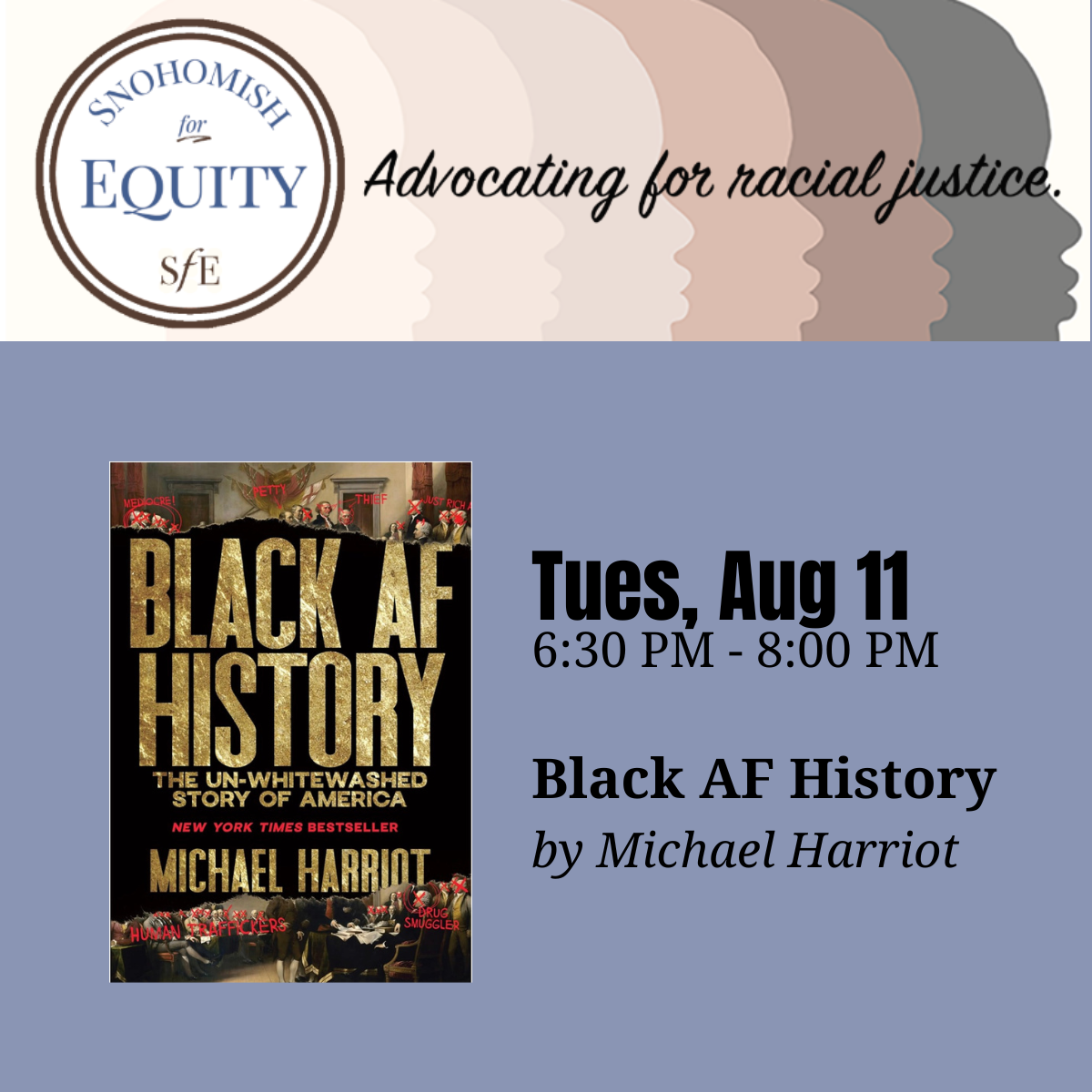
August: Black AF History: The Un-Whitewashed Story of America by Michael Harriot
From acclaimed columnist and political commentator Michael Harriot, a searingly smart and bitingly hilarious retelling of American history that corrects the record and showcases the perspectives and experiences of Black Americans.
America’s backstory is a whitewashed mythology implanted in our collective memory. It is the story of the pilgrims on the Mayflower building a new nation. It is George Washington’s cherry tree and Abraham Lincoln’s log cabin. It is the fantastic tale of slaves that spontaneously teleported themselves here with nothing but strong backs and negro spirituals. It is a sugarcoated legend based on an almost true story.
In Black AF History, Michael Harriot presents a more accurate version of American history. Combining unapologetically provocative storytelling with meticulous research based on primary sources as well as the work of pioneering Black historians, scholars, and journalists, Harriot removes the white sugarcoating from the American story, placing Black people squarely at the center. With incisive wit, Harriot speaks hilarious truth to oppressive power, subverting conventional historical narratives with little-known stories about the experiences of Black Americans. From the African Americans who arrived before 1619 to the unenslavable bandit who inspired America’s first police force, this long overdue corrective provides a revealing look into our past that is as urgent as it is necessary. For too long, we have refused to acknowledge that American history is white history. Not this one. This history is Black AF.
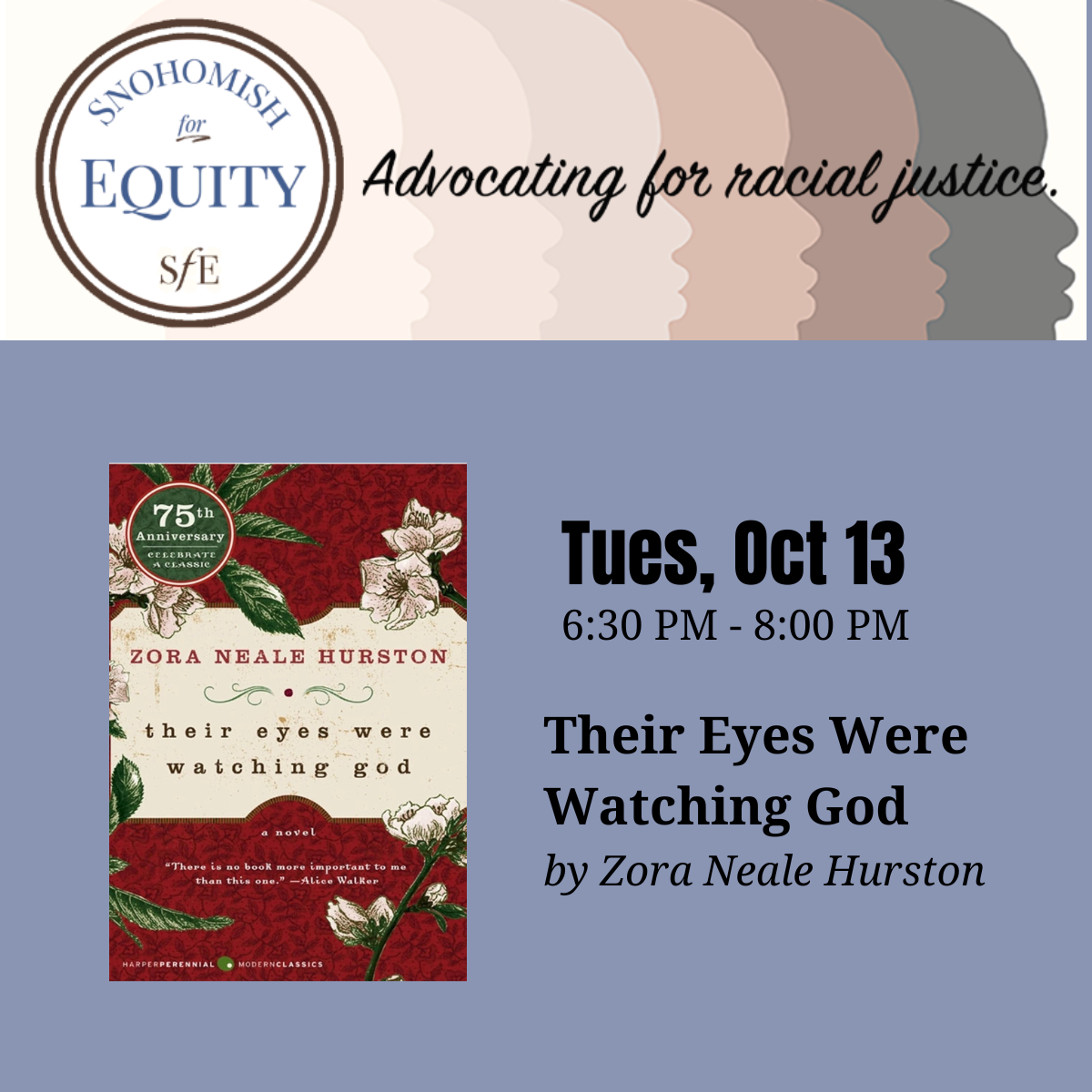
October: Their Eyes Were Watching God by Zora Neale Hurston
Fair and long-legged, independent and articulate, Janie Crawford sets out to be her own person—no mean feat for a black woman in the '30s. Janie's quest for identity takes her through three marriages and into a journey back to her roots.
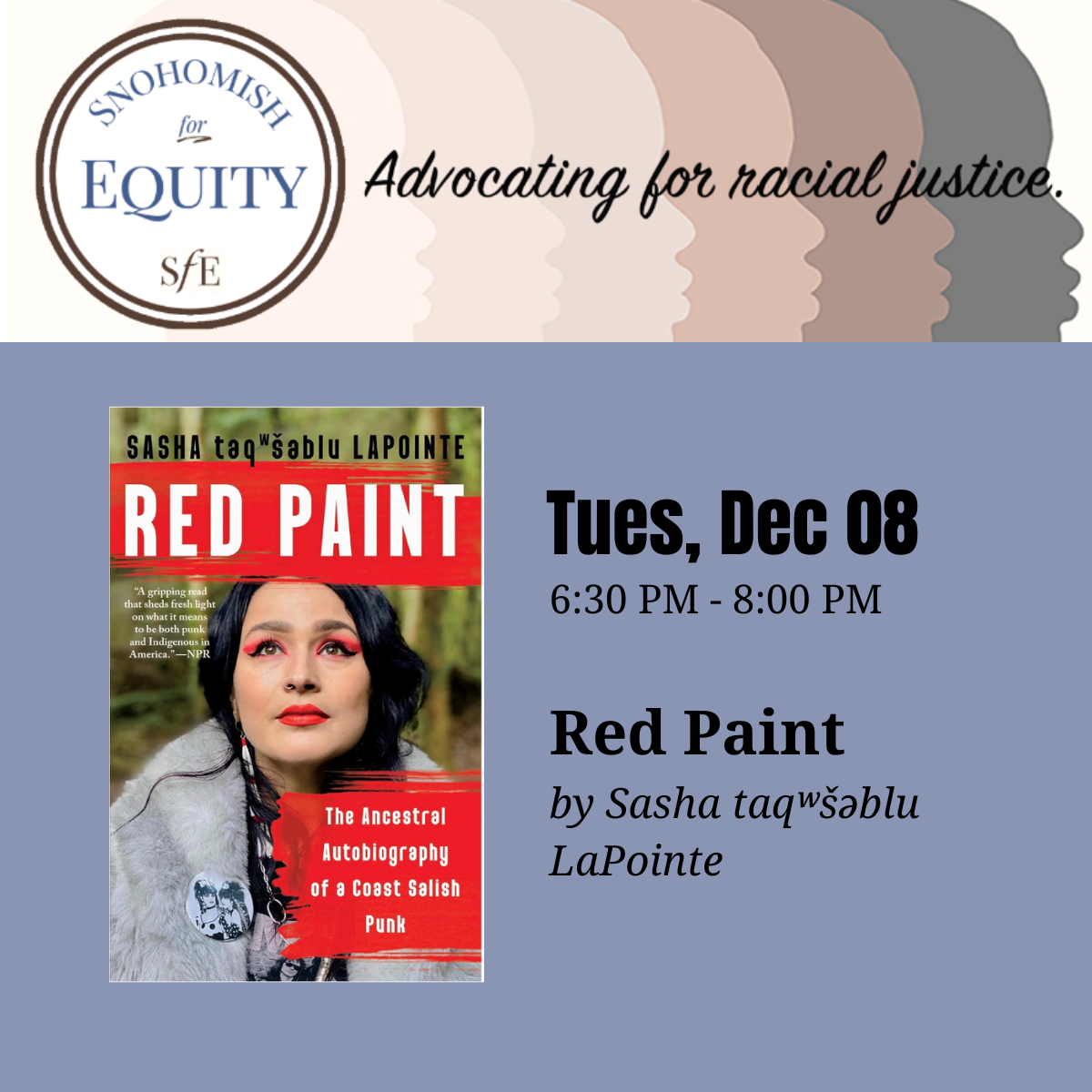
December: Red Paint: The Ancestral Autobiography of a Coast Salish Punk by Sasha taqwšəblu LaPointe
An Indigenous artist blends the aesthetics of punk rock with the traditional spiritual practices of the women in her lineage in this bold, contemporary journey to reclaim her heritage and unleash her power and voice while searching for a permanent home.
Sasha taqʷšəblu LaPointe has always longed for a sense of home. When she was a child, her family moved around frequently, often staying in barely habitable church attics and trailers, dangerous places for young Sasha.
With little more to guide her than a passion for the thriving punk scene of the Pacific Northwest and a desire to live up to the responsibility of being the namesake of her beloved great-grandmother—a linguist who helped preserve her Indigenous language of Lushootseed—Sasha throws herself headlong into the world, determined to build a better future for herself and her people.
Set against a backdrop of the breathtaking beauty of Coast Salish ancestral land and imbued with the universal spirit of punk, Red Paint is ultimately a story of the ways we learn to find our true selves while fighting for our right to claim a place of our own.
Examining what it means to be vulnerable in love and in art, Sasha offers up an unblinking reckoning with personal traumas amplified by the collective historical traumas of colonialism and genocide that continue to haunt native peoples. Red Paint is an intersectional autobiography of lineage, resilience, and, above all, the ability to heal.
Past Book Club Meetings
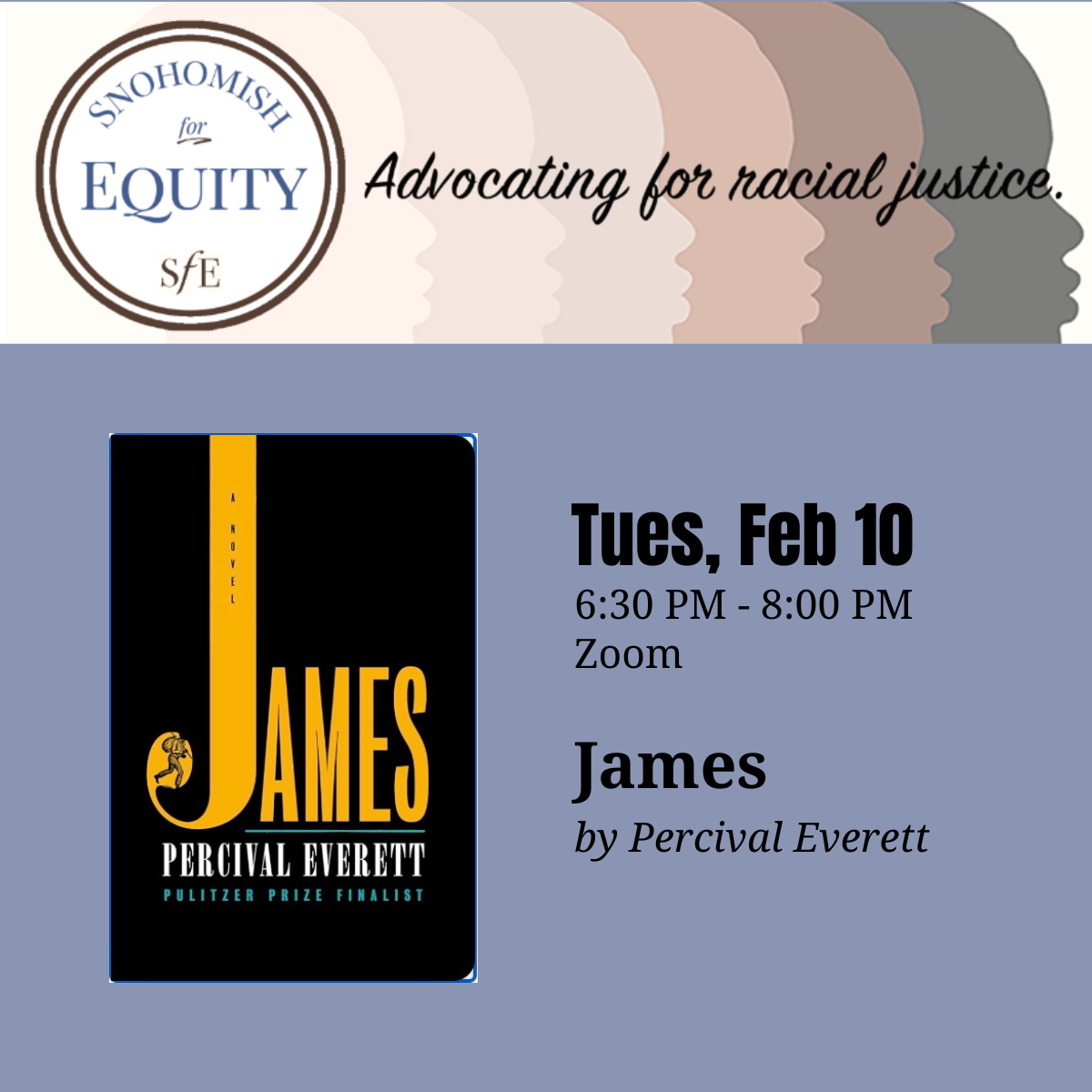
February: James by Percival Everett
A brilliant reimagining of Adventures of Huckleberry Finn—both harrowing and satirical—told from the enslaved Jim's point of view
When Jim overhears that he is about to be sold to a man in New Orleans, separated from his wife and daughter forever, he runs away until he can formulate a plan. Meanwhile, Huck has faked his own death to escape his violent father. As all readers of American literature know, thus begins the dangerous and transcendent journey by raft down the Mississippi River toward the elusive and unreliable promise of the Free States and beyond.
Brimming with nuanced humor and lacerating observations that have made Everett a literary icon, this brilliant and tender novel radically illuminates Jim's agency, intelligence, and compassion as never before. James is destined to be a major publishing event and a cornerstone of twenty-first-century American literature.
-
Why is it important to revisit this story through James’ perspective? What does this book reveal about the importance of literacy in James being able to tell his own story? How does this relate to the name of the novel? See pages 48, 69, 73, 89, 91, 154, 203, 287, 288, and 302.
Have you read The Adventures of Huckleberry Finn? In what ways does the story of Huck’s quest for adventure change with James as the protagonist? See pages 68 and 72.
What is the significance of James’ imaginary debates with philosophers throughout the book? Who does he talk to and what about? See pages 49, 102, 247, and 277.
Throughout the book, James and other enslaved people switch up their language/diction depending on who is around. Why is this necessary for their survival? See pages 15, 21, 52, 99, 143, 165, and 262.
What do you think is the author's purpose in writing the character of Huck, and the development of Huck and James' relationship, the way that he did?
How does this book complicate our view of “slave” versus “free” state during this time? Does James’ status really change as he travels from one state to another? See pages 41, 65, 79, 85, 136, and 219.
A central theme in this book is refuting the idea of a “good” or “benevolent” enslaver. Where is this myth addressed? What characters help us understand slavery’s cruelty regardless of if and how a white person was an enslaver? See pages 27, 89, 106, 149, 157, 161, 167, 176, 197, 282, and 290.
Why do you think Everett included the plot about the minstrel performers? What does this act reveal about how race is “performed”? See pages 157, 166, 170, 189, 195, and 200.
In this retelling, we learn who is the real father of Huck. Why do you think Everett made this choice? Does it change your understanding of the story fundamentally? If so, why? See pages 25, 46, 95, 150, 253, 257, and 264.
James depicts the brutalities of slavery, particularly the violence inflicted upon enslaved women and girls, through the stories of Sadie, Lizzie, Sammy, and Katie. What are the unique threats that these characters must navigate? How does Jim react to the gendered violence that he encounters?
Discuss the use of religion and superstition in the story.
Sources:
https://www.abhmuseum.org/wp-content/uploads/2023/09/ABHM-Book-Club-James-Discussion-Guide.pdf
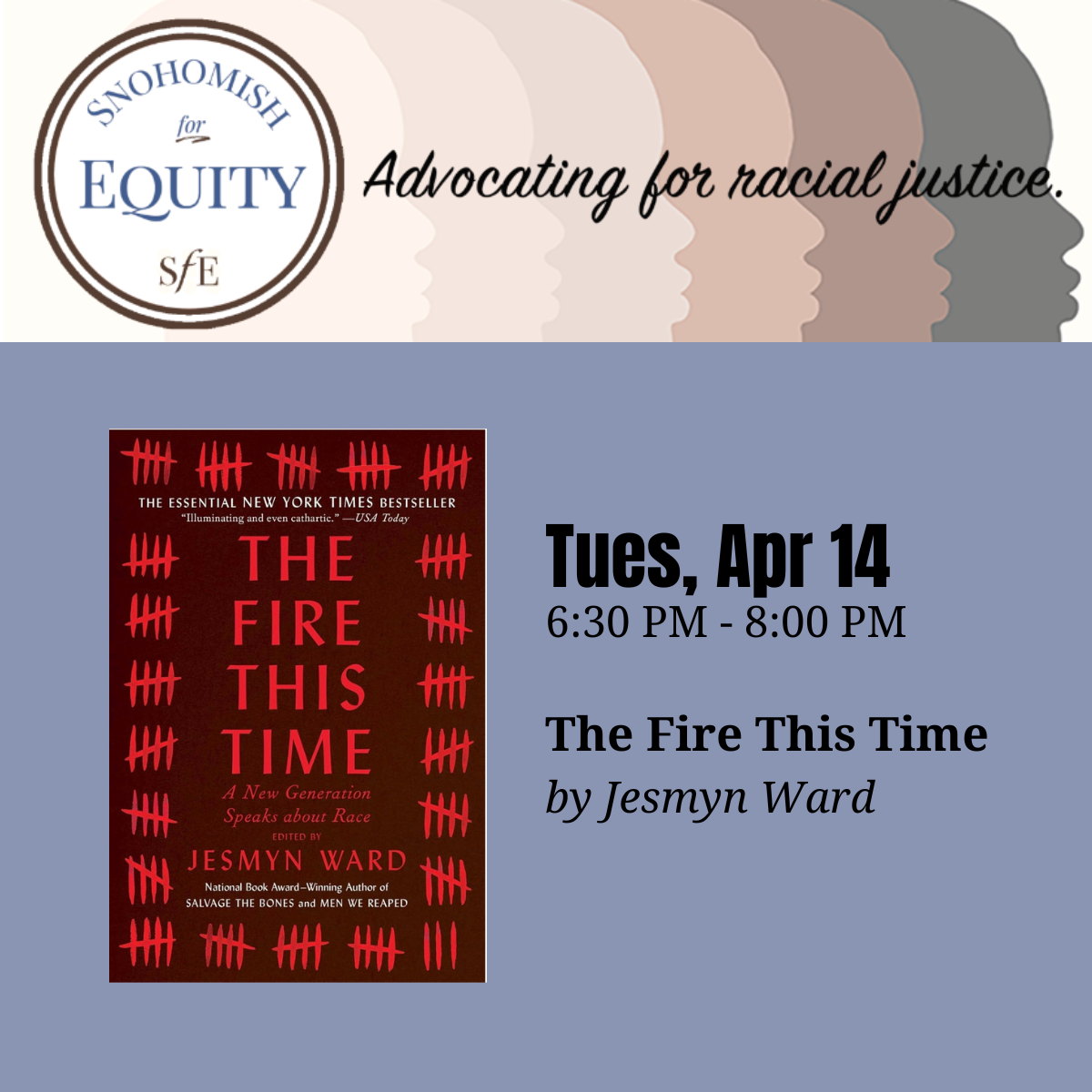
April: The Fire This Time: A New Generation Speaks About Race by Jesmyn Ward
National Book Award winner Jesmyn Ward takes James Baldwin’s 1963 examination of race in America, The Fire Next Time, as a jumping off point for this groundbreaking collection of essays and poems about race from the most important voices of her generation and our time.
In light of recent tragedies and widespread protests across the nation, The Progressive magazine republished one of its most famous pieces: James Baldwin’s 1962 “Letter to My Nephew,” which was later published in his landmark book, The Fire Next Time. Addressing his fifteen-year-old namesake on the one hundredth anniversary of the Emancipation Proclamation, Baldwin wrote: “You know and I know, that the country is celebrating one hundred years of freedom one hundred years too soon.”
Award-winning author Jesmyn Ward knows that Baldwin’s words ring as true as ever today. In response, she has gathered short essays, memoir, and a few essential poems to engage the question of race in the United States. And she has turned to some of her generation’s most original thinkers and writers to give voice to their concerns.
-
The Baldwin Connection
Ward’s anthology of essays and poems was conceived as a response to James Baldwin's The Fire Next Time, which addressed the future in a letter to Baldwin's nephew and reflected on race and religion.
Baldwin wrote to his nephew that the country was "celebrating one hundred years of freedom one hundred years too soon." Does Ward's anthology suggest we are any closer to that freedom today?
For those who have read The Fire Next Time, how does Ward's collection update or complicate Baldwin's vision? What has changed since 1963, and what hasn't?
History, Memory, and Silence
Wendy S. Walters's essay deals with visiting the site of a mass African grave, while Honorée Fanonne Jeffers researches the poet Phillis Wheatley. How do these essays treat the relationship between historical recovery and present-day Black identity?
Several contributors explore histories of slavery and racial violence that have been buried or ignored. Why do you think these silences persist, and what is the cost of them?
Parenting and the "Two Conversations"
Edwidge Danticat writes about feeling she must have two conversations with her daughters: one about why they're here, and another about why America isn't always a promised land for people who look like them. Did any contributors' reflections on parenthood and race particularly resonate with you?
How do the writers in this anthology balance the desire to protect their children with the need to tell them the truth?
Identity and Belonging
After genetic testing, Ward discovered her ancestry was 40 percent European — a result she found unsettling, writing that for a few days afterward she looked in the mirror and didn't know how to understand herself. How does her essay "Cracking the Code" complicate easy notions of racial identity?
Rachel Kaadzi Ghansah writes about visiting Baldwin's former home in France and her sense of isolation as a Black writer in America. How do the contributors negotiate belonging — to a nation, a community, a literary tradition?
Rage, Grief, and Mourning
Poet Claudia Rankine was told by the mother of a Black son that "the condition of Black life is one of mourning." Do you think the anthology as a whole endorses this view, complicates it, or offers alternatives to it?
Carol Anderson's essay "White Rage" argues that Black progress in America has historically been met with backlash. Did her historical framing change the way you think about recent events?
Political Backlash of White Rage
Carol Anderson's "White Rage" documents how expansions of Black civic and educational opportunity have historically triggered organized political backlash — not through open hostility, but through the quiet dismantling of policy, funding, and access. Where do you see the patterns Anderson describes playing out in our schools or district?
What does Ward's anthology — written by people who found transformative power in literature and intellectual community — suggest about what students stand to lose when those histories and voices are removed from their education?
Form and Voice
The anthology includes essays, memoir, and poems. Did the shift between forms affect how you received different arguments? Were there pieces where the form felt especially well-matched to the subject?
Ward assembled writers she considers great thinkers and extraordinary voices of her generation to help her "puzzle out" what was happening in America. Did any particular voice or essay surprise you, challenge you, or stay with you longest?
Looking Forward
The anthology is framed as shining a light on the darkest corners of American history, wrestling with the current predicament, and imagining a better future. Did you feel the book succeeded in that third aim — imagining a better future? Which essays felt most hopeful, and which felt most despairing?
Ward gathered these voices in response to a specific cultural moment. Reading now, does the book feel dated, or does it feel urgent? What would you add to this conversation today?
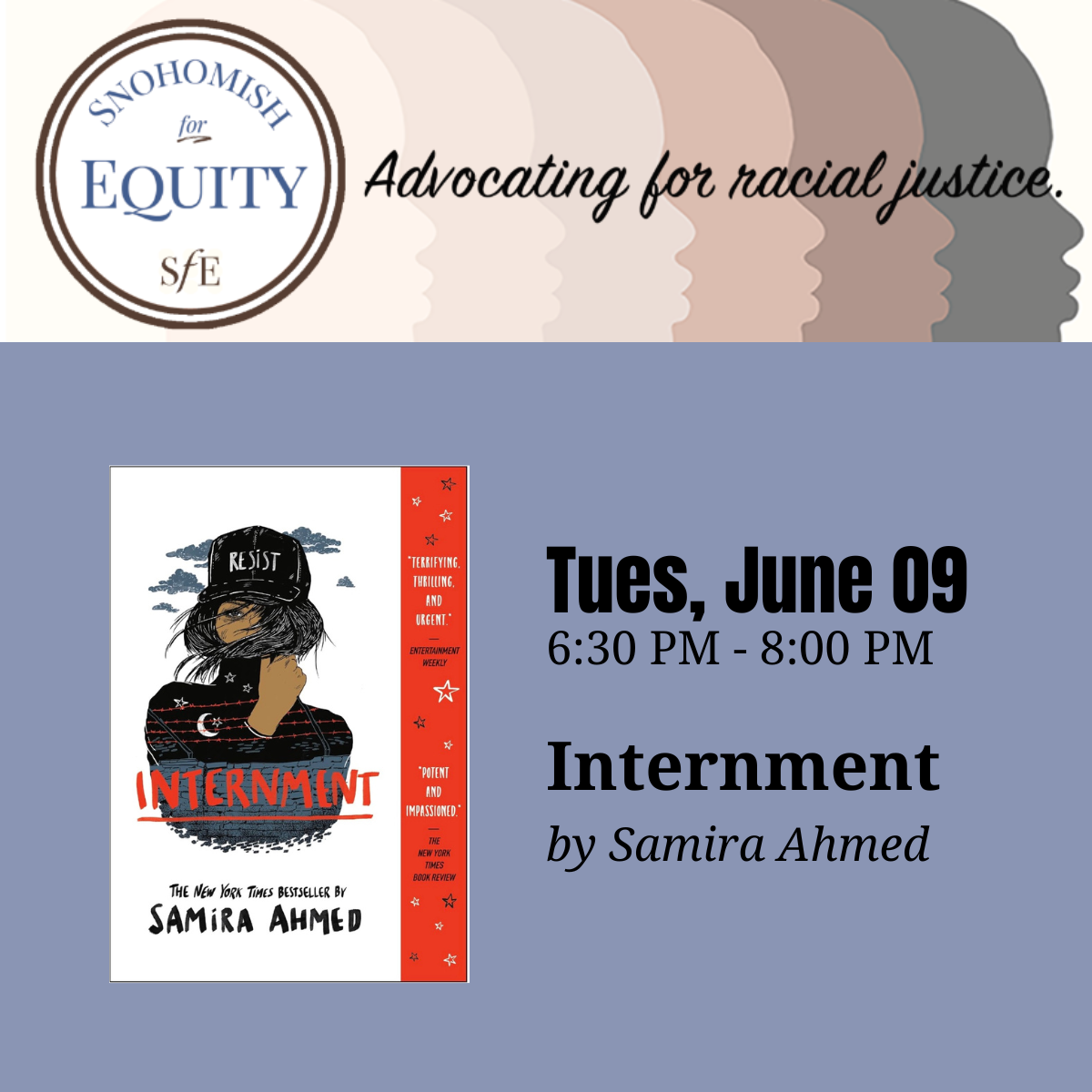
June: Internment by Samira Ahmed
Rebellions are built on hope.
Set in a horrifying near-future United States, seventeen-year-old Layla Amin and her parents are forced into an internment camp for Muslim American citizens.
With the help of newly made friends also trapped within the internment camp, her boyfriend on the outside, and an unexpected alliance, Layla begins a journey to fight for freedom, leading a revolution against the internment camp's Director and his guards.
Heart-racing and emotional, Internment challenges readers to fight complicit silence that exists in our society today.
-
“John Adams… meant democracy is fragile. All we can do right now is go along,” (p. 38) says Layla’s father, after she has challenged her parents’ cooperation with authorities. Discuss the different ways people in the novel respond to the internment camp and to new laws being put in place that take away Muslim rights. What are the different motivations for their responses? Are there benefits and drawbacks to all responses, or do you think some are more legitimate than others?
In what different ways do internees and directors at Mobius try to create normalcy there? What are the complex outcomes of these attempts? Do you think Layla’s rejection of these attempts at normalcy is warranted? Why or why not?
Discuss your view of the “minders” role at Mobius. What motivates them?
Layla observes of Suraya: “This year must have been so much harder for her, someone so visibly Muslim. And black” (p.263). What role does the intersection between race and faith play in the treatment of the internees? How does this intersection, and other differences in experience and culture, factor into the privilege afforded different characters?
In what ways do incidents throughout American and world history, as well as in the novel Internment, relate to the Director’s quote: “People want to be happy in their ignorance…. Give them an Other to hate, and they will do what they are told” (p.328). Do you think this quote is an accurate reflection of human nature?
What different character types are represented by the guard, Jake, and Layla’s boyfriend, David?
Layla reflects, “We may all be Muslims, but we still have our prejudices and racism. It’s simpler to play on our internalized ‘-isms’ if you separate us and feed our fears – easier to make us ‘other’ ourselves and do the directors work for him… maybe it wouldn’t be hard to tap into our bigotry to turn us against one another, to turn our gaze away from where our anger should really be directed. Classic colonial conquest strategy.” (p. 96-97) What commentary does this novel make on this idea? In your opinion, has there been any improvement in this aspect of human nature over the course of human history?
Layla describes an event at Mobius: “Then one of them lost his patience with the man… the guards handcuffed him and took him away… the rest of us who saw it happen just stood there. Doing nothing. Saying nothing. And then we dispersed.” (p. 122) Is inaction in response to a specific event always the same as “doing nothing”? In what ways does the novel refute this idea?
In what ways does internment and the subjugation in Mobius change people?
In her Author’s Note at the back of the novel, Ahmed says, “…the concept of our nation is neither musty nor static… everyday we can shape it and stretch it to form a more perfect, inclusive union. America is us. America is ours. It is worth fighting for” (p. 382). Discuss your view of this statement, and the extent to which this idea influences your own thinking and actions.